
Bitcoin Is Surging: What’s Driving the Move?
Bitcoin is back in the spotlight. After a difficult stretch for cryptocurrency markets, Bitcoin has staged a sharp rebound, recently climbing above $87,000 and reaching its highest level since January. The move has surprised some investors because it has happened despite higher U.S. interest rates and several unresolved risks facing financial markets.
So, what’s behind the sudden surge?
There isn’t one simple answer. Several forces appear to be working together, including renewed demand through Bitcoin exchange-traded funds (ETFs), short covering, changing expectations around cryptocurrency regulation, institutional buying, and even a broader improvement in appetite for riskier assets.
Here’s what investors are watching.
1. Bitcoin ETF demand has returned

One of the clearest developments has been renewed buying through U.S. spot Bitcoin ETFs. These funds allow investors, to gain exposure to Bitcoin, through the traditional brokerage accounts without directly holding on to the cryptocurrency. It is this that has made ETF flows an important indicator of institutional and mainstream investor demand.
On September 18, U.S. spot Bitcoin ETFs recorded roughly $433 million in net inflows, according to reporting cited by the Wall Street Journal. BlackRock’s IBIT and Fidelity’s FBTC accounted for a large portion of that day’s buying. More recent reporting also indicates that Bitcoin ETFs attracted approximately $2.3 billion over four days, marking a significant change from the weaker flows seen earlier in the year.
So Why does this matter?
When large amounts of money enter spot Bitcoin ETFs, the funds generally need to acquire Bitcoin or otherwise maintain an exposure to it. Continued inflows can therefore provide an additional source of demand. This doesn’t necessarily guarantee higher prices, but it do help to explain why Bitcoin has been able to recover so quickly.
2. Short sellers were caught on the wrong side
Another important factor is short covering.

A short seller is essentially betting that an asset will fall. When the asset instead rises sharply, those traders may have to buy it back to close their positions. It is that buying of the asset that can accelerate an already-rising market. Recent reporting, attributed part of Bitcoin’s move above $87,000 to a significant liquidation of bearish crypto positions. It has been reported by Investor’s Business Daily that about $919 million in crypto shorts were liquidate, including more than $557 million involving Bitcoin.
This therefore creates a feedback loop:
Bitcoin rises → Short positions lose money → Traders buy to close positions → Buying pushes Bitcoin higher → More short positions come under pressure.
This can then produce very fast price movements. However, short covering is different from long-term investment demand. Once forced buying fades, the market has to find another source of momentum.
3. Institutional investors are still paying attention
Institutional participation has become increasingly important to Bitcoin’s market structure.
One example of this is Strategy, the company led by Michael Saylor, which purchased approximately $75.7 million worth of Bitcoin during the week before Bitcoin’s September surge. The company’s reported holdings reached just about 846,000 Bitcoin. Institutional activity doesn’t always mean every large investor is bullish on Bitcoin. Continued purchases from various major institutions demonstrate that Bitcoin remains a significant part of the asset-allocation conversation for some large investors.
The ETF market has reinforced that trend by giving institutions another way to gain exposure.
4. Regulatory expectations have improved in some areas
Regulation has also played a role in market sentiment.

The U.S. Senate’s failure to advance the CLARITY Act created disappointment for some cryptocurrency investors. However, the broader regulatory picture hasn’t been entirely negative. Recent developments involving the Securities and Exchange Commission (SEC) and Commodity Futures Trading Commission (CFTC) have contributed to expectations of clearer rules for parts of the digital-asset industry.
Markets often react not only to laws that have actually passed, but also to expectations about the direction that regulators are taking. For Bitcoin and other cryptocurrencies, greater regulatory clarity could potentially make it easier for financial institutions and businesses to participate.
At the same time, regulatory policy remains an evolving issue. Investors should be careful about treating individual announcements as permanent changes.
5. Bitcoin has shown surprising strength despite higher interest rates
Normally, higher interest rates can create some difficulty for assets such as Bitcoin.
When government bonds and cash-like investments offer higher yields, investors have less incentive to take additional risk. Higher borrowing costs can also reduce liquidity throughout financial markets. The Federal Reserve recently raised its benchmark interest-rate target to between 3.75% and 4.00%, adding another challenge for risk assets.
Yet Bitcoin continued to rally.
That doesn’t mean that interest rates no longer matter. Instead, it suggests that other forces – particularly ETF demand and positioning in the derivatives market – have been strong enough recently, to offset some of the pressure from tighter monetary policy.
6. The technical picture has improved
Bitcoin’s price behavior itself has also attracted this attention.
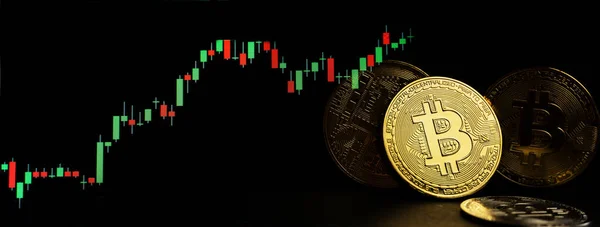
The cryptocurrency recovered from below $76,000 and subsequently moved through the $80,000 area before breaking above $85,000. That recovery changed the short-term technical picture and encouraged some traders to increase their exposure.
Technical levels can become self-reinforcing.
If enough traders watch the same price levels, a breakout can trigger new buying, while traders who were betting against the market may close their positions.
This can help explain why Bitcoin sometimes moves much faster than traditional financial assets.
7. Bitcoin isn’t moving in exactly the same way as stocks and gold
One of the more interesting aspects of the current rally, is Bitcoin’s performance relative to other major assets.
According to recent market reporting, Bitcoin has gained roughly 36% since August 18 2026, while the S&P 500 ETF SPY was nearly unchanged, over the same period and a major gold ETF declined modestly. That divergence has renewed debate about what Bitcoin is actually behaving like.
For years, investors have alternately described Bitcoin as a technology asset, a speculative risk asset, a digital form of money, or a potential alternative to gold. The current rally doesn’t really settle that debate.
It does, however, show that Bitcoin can develop its own momentum rather than simply following stocks or precious metals.
What could happen next?

The recent rally doesn’t eliminate Bitcoin’s risks. Bitcoin remains highly volatile, and several factors could reverse the current momentum.
ETF flows
If investors stop putting money into spot Bitcoin ETFs – or begin withdrawing substantial amounts – one important source of demand could weaken.
Interest rates
Higher Treasury yields and persistent inflation could continue putting pressure on risk assets. Recent reporting has highlighted Treasury yields as one of the major risks to the rally.
Geopolitical uncertainty
Financial markets remain sensitive to developments involving trade, energy prices and international conflicts. Sudden changes in risk sentiment can affect cryptocurrencies very quickly.
Leverage
The derivatives market can amplify both gains and losses. A heavily leveraged market can experience large price swings even when the underlying news hasn’t changed dramatically.
Profit-taking
After such a rapid rebound, some investors may choose to lock in gains. That can create sharp pullbacks even if the longer-term Bitcoin story remains unchanged.
So, Why is Bitcoin surging?
The simplest answer is that several sources of demand have arrived at the same time.
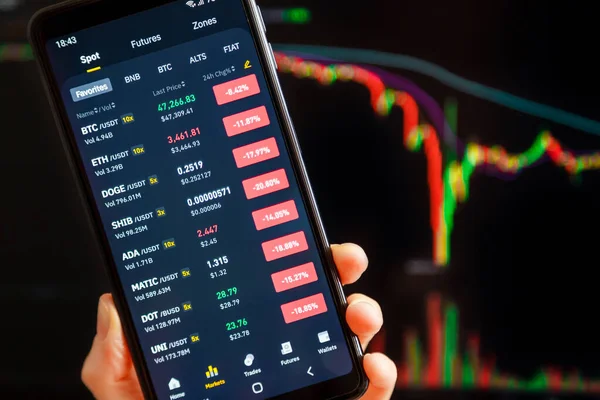
ETF inflows have strengthened. Institutional participation remains significant. Short sellers have been forced to buy as prices moved higher. Regulatory sentiment has improved in some areas, while technical momentum has attracted additional traders. However Bitcoin’s rally should not be interpreted simply as proof that prices can only go higher.
Cryptocurrency remains a quite volatile asset class. The same market dynamics that can accelerate a rally can also accelerate a decline. For investors and anyone simply following the market, the most important numbers to watch now may be Bitcoin ETF flows, Treasury yields, interest-rate expectations, derivatives positioning, and continued institutional demand.
The next stage of Bitcoin’s move may depend less on the excitement surrounding the initial surge and more on whether actual demand continues after the short-covering and momentum-driven buying fades.
Bitcoin’s latest surge seems to be as the result of several factors coming together, rather than just one single catalyst. Whether the rally develops into a longer-lasting trend, will depend on whether those said sources of demand, remain strong.
